
Homeowners insurance roof coverage – what does it entail for Savannah residents?
Most homeowners believe their insurance policy covers any roof damage. However, that is not always the case, and sometimes, that assumption can become expensive the moment a claim is denied. In reality, roof coverage often depends on the cause of the damage, the roof’s age, and the condition of the materials, not to mention the homeowner’s insurance provider you use.
A severe thunderstorm that causes shingle damage may qualify, but neglect or an old roof usually will not. Which leads to this question you might have: Does homeowners’ insurance cover roof damage in Savannah?
Read on to learn what Savannah homeowners need to know before relying on their insurance policy.
First, why is the weather so hard on Savannah roofs?
Savannah roofs face a rough mix of coastal weather, and that matters when insurance comes into play. Standard homeowners’ insurance often covers sudden damage from wind, hail, fire, or hurricanes listed in the policy, but it does not cover routine wear and tear. That distinction matters more in coastal Georgia, where roofs face repeated stress from strong winds, heavy rain, flooding risk, humidity, and salt exposure.
The National Oceanic and Atmospheric Administration (NOAA) and related coastal science sources note that Savannah regularly experiences coastal flooding and onshore winds, while NWS records show that Savannah has a long history of tropical systems and severe wind events.
Why the coastal Savannah weather wears roofs down faster:
- Salt air can speed up corrosion on metal parts and flashing
- Heat can age shingles faster
- Humidity can worsen moisture problems after storms
- Repeated wind events can loosen roofing materials over time
When Does Homeowners Insurance Cover Roof Damage?
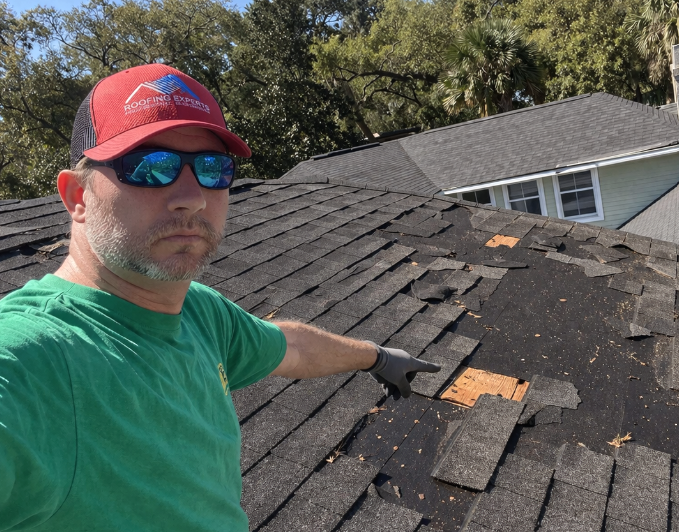
The short answer is simple. Homeowners insurance usually covers roof damage when the cause is sudden and accidental and tied to a covered peril named in the policy, such as windstorm, hail, fire, lightning, or a falling tree.
Think of it this way: A big storm comes out of nowhere, and it rips off 25% of your shingles. After a roof inspection by an adjuster, you can usually have your roof replaced or repaired because the damage was caused by a storm rather than neglect.
It usually does not cover gradual decline, neglect, or old age. The Insurance Information Institute explains that standard homeowners policies generally cover repairs or rebuilding of homes damaged by listed disasters, while excluding flood, earthquake, and routine wear and tear. After a disaster, insurers also typically expect prompt documentation and a timely claim.
| Roof damage cause | Usually covered? |
|---|---|
| Wind or storm damage | Yes |
| Hail impact | Yes |
| Fire or lightning | Yes |
| Falling tree or debris | Often yes |
| Old age or wear | No |
| Neglected maintenance | Usually no |
Remember, your policy and provider have the details and specifics. We can’t guarantee your homeowners’ insurance will cover roof damage; however, we can help you navigate the process.
What Types of Roof Damage Are Usually Covered?
What kind of storm damage is covered by your homeowners’ insurance in Savannah?
Most covered roof claims fall into one category: sudden damage you can tie to a specific event. In Savannah, that often means wind-driven storms, tropical weather, fallen limbs, lightning, or hail. If shingles are ripped off after a storm, flashing is bent by high winds, or a tree crashes into the roof, those are the kinds of losses homeowners’ insurance commonly covers, assuming the policy is active, and the damage was not caused by long-term neglect. The key is to prove the event and clearly show the damage.
Commonly covered examples:
- Missing or lifted shingles after a windstorm
- Punctures from fallen branches or storm debris
- Roof damage tied to fire or lightning
- Hail bruising, cracking, or granule loss
- Interior leaks that began right after a covered storm event
Roof Damage Insurance Exclusions That Surprise Homeowners
Many Savannah homeowners assume insurance covers any roof problem. That is rarely the case. Insurance policies focus on sudden events, not slow deterioration. If damage happens gradually or results from poor upkeep, most insurers will deny the claim. That surprise catches many homeowners off guard after a leak appears.
Common exclusions include:
- Normal aging of shingles
- Long term water intrusion (rook leaks)
- Mold caused by ignored roof leaks
- Damage from clogged gutters
- Poor installation by unlicensed contractors
| Roof Issue | Typically Covered? | Why |
|---|---|---|
| Storm damage | Yes | Sudden and accidental |
| Fallen tree | Yes | Covered peril |
| Old roof deterioration | No | Expected wear |
| Neglected leak | No | Maintenance issue |
How Roof Age Can Affect Insurance Coverage
Roof age plays a major role in how much your insurance will actually pay after a claim, thanks to how insurance companies prorate your shingles. Even if a storm caused the problem, insurers often adjust payouts based on the roof’s lifespan. This is similar to how the tire shop will give you 30% of your money back if your tire pops, but is 70% worn.
With Savannah having many older roofs, your roof may still qualify for coverage, but the reimbursement may be reduced due to depreciation of the roofing material, especially with asphalt shingles.
Two common policy structures affect payouts: the replacement value vs. the actual cash value. For homeowners, these two can be confusing, so here is a table below:
| Policy Type | How It Works |
|---|---|
| Replacement Cost | Pays the cost to replace the roof minus the deductible |
| Actual Cash Value | Pays the depreciated value of the roof |
Example roofing homeowners’ insurance scenario:
- A 5 year old roof often qualifies for full replacement cost
- A 20 year old roof may receive only partial reimbursement
Insurance companies look closely at roof condition before approving claims.
5 Signs Your Roof Damage Might Qualify for an Insurance Claim
Not every roof problem qualifies for home insurance coverage. Insurance companies typically approve insurance claims when the damage results from sudden events such as storms or falling debris. If you notice the following signs, your roof may qualify for coverage.
1. Shingles missing after a storm
Strong winds can tear off roofing materials. A roofer may recommend immediate roof repair to prevent water intrusion.
2. Sudden interior water leaks
Ceiling stains or dripping water after a storm often signal roof damage that requires inspection. A roof leak is the most common sign after missing shingles!
3. Fallen tree branches on the roof
Storm debris often results in approved insurance claims, especially when structural damage occurs. They can cause roof leaks, gutter damage and more!
4. Visible dents or cracks in shingles
Hail impacts can weaken roofing materials and lead to long-term problems if ignored, the same with debris from a storm that damages your shingles (think large branches).
5. Large sections of the roof are lifted or warped
Severe wind can compromise the entire roof system on your home, sometimes requiring partial roof replacement.
A professional roofer like Derek and the Roofing Experts, who specializes in residential roofing, can assess the damage and help homeowners understand whether the situation may qualify under their insurance company policy.
How to File a Roof Insurance Claim in Savannah
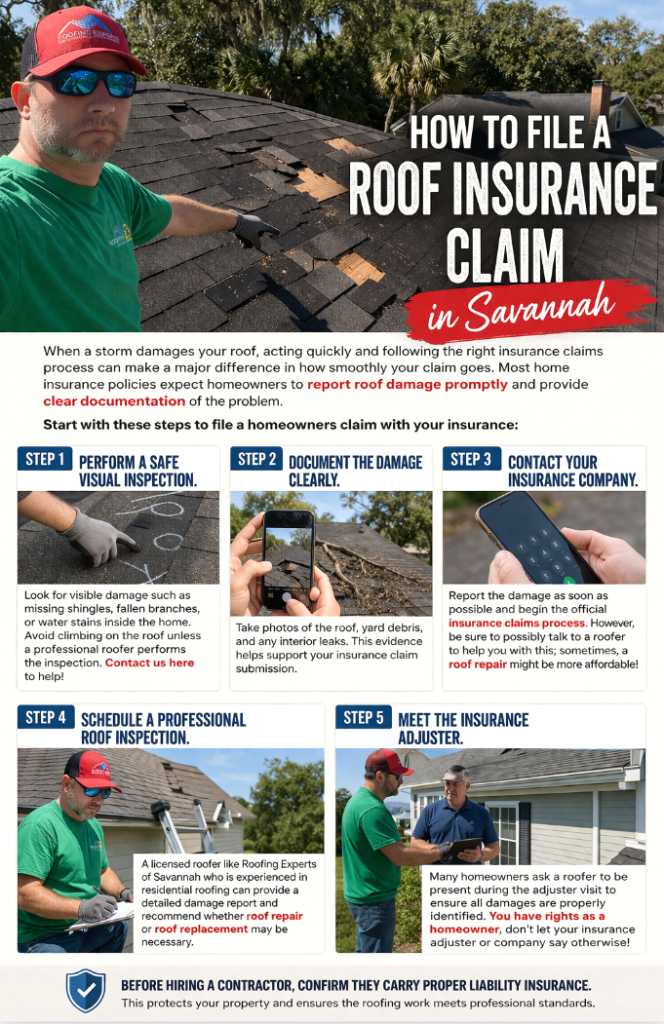
When a storm damages your roof, acting quickly and following the right insurance claims process can make a major difference in how smoothly your claim goes. Most home insurance policies expect homeowners to report roof damage promptly and provide clear documentation of the problem.
Start with these steps to file an homeowners claim with your insurance:
Step 1. Perform a safe visual inspection.
Look for visible damage to your Savannah roof such as missing shingles, fallen branches, or water stains inside the home. Avoid climbing on the roof unless a professional roofer performs the inspection. Contact us here to help!
Step 2. Document the damage clearly.
Take photos of the roof, yard debris, and any interior leaks. This evidence helps support your insurance claims submission.
Step 3. Contact your insurance company.
Report the damage as soon as possible and begin the official insurance claims process. However, be sure to talk to a roofer to help you with this; sometimes, a roof repair might be more affordable!
Step 4. Schedule a professional roof inspection.
A licensed roofer like Roofing Experts of Savannah, who is experienced in residential roofing, can provide a detailed damage report and recommend whether roof repair or roof replacement may be necessary.
Step 5. Meet the insurance adjuster.
Many homeowners ask a roofer to be present during the adjuster visit to ensure all damages are properly identified. You have rights as a homeowner, don’t let your insurance adjuster or company say otherwise!
Before hiring a contractor, confirm they carry proper liability insurance. This protects your property and ensures the roofing work meets professional standards.
Why Local Savannah Roofing Experts Matter in Insurance Claims
Navigating homeowners’ insurance can feel like learning a foreign language sometimes! They seem to make it hard to understand on purpose. That is why you need a trusted roofing expert who is local to Savannah and Pooler.
Filing roof-related insurance claims becomes much easier when a trusted local roofing company is involved. Savannah’s coastal climate brings strong winds, heavy rain, and humidity that affect different roofing systems in unique ways. Local contractors understand how storm-damage and wind insurance claims typically work in the region.
Experienced local roofers help by:
- Inspecting shingles, flashing, and structural components for hidden water damage
- Checking vulnerable areas such as the attic for leaks or moisture buildup
- Identifying problems common to coastal roofs, including issues with asphalt shingle systems or a flat roof
- Documenting storm-related damage for insurance adjusters
Local experts also understand manufacturer warranty requirements and installation standards. Their reports help homeowners clearly show that the damage resulted from a covered event rather than long-term neglect.
How Preventive Roof Maintenance Protects Your Insurance Coverage
Regular maintenance does more than extend roof life. It also protects your eligibility for insurance coverage. Many policies will deny claims if damage results from neglect or excessive wear and tear. That is why we recommend routine home and roof inspections to help detect small issues before they become major problems.
Important maintenance tasks include:
- Checking asphalt shingle roofs for loose or cracked materials
- Inspecting the attic for early signs of roof leaks or moisture buildup
- Clearing gutters to prevent water damage along the roofline
- Monitoring flashing around vents and chimneys
- Inspecting flat roof drainage systems
Proper upkeep also protects your roofing warranty and strengthens your case if you ever file a claim. Insurance providers expect homeowners to maintain their roof so that only sudden storm-related events trigger coverage.
When Insurance Will Not Cover Roof Repairs
Homeowners insurance is designed for unexpected events, not long-term deterioration. Understanding these exclusions helps prevent disappointment during the claims process.
Insurance typically will not cover roof repairs caused by:
- Normal wear and tear from aging materials
- Long-term leaks that lead to interior water damage
- Poor installation that voids a roofing warranty
- Structural issues have been ignored for years
- Flood-related damage, which falls under separate flood insurance
Even storm coverage can vary. Some policies in coastal areas separate wind insurance from standard coverage. That means wind-driven damage may require a specific policy addition.
Knowing these insurance limitations helps homeowners prepare for both maintenance and unexpected roofing events.
How Savannah Homeowners Can Reduce Future Roof Damage
Savannah’s coastal weather means roofs face constant stress from humidity, storms, and strong winds. While no roof is completely immune to the elements, a few proactive steps can greatly reduce the risk of future problems. Prevention often costs far less than dealing with a severely damaged roof later.
Start with these practical strategies:
- Schedule regular roof inspections – A trusted roofing contractor can spot early warning signs of wind damage, loose shingles, or weak flashing before they turn into larger structural problems.
- Trim nearby trees – Overhanging branches can break during storms and cause major roof damage.
- Replace aging materials early- Older shingles become brittle and more vulnerable to wind and rain.
- Choose experienced professionals for repairs – Quality workmanship ensures repairs hold up during future storms.
- Work with local roofing contractors to the Savannah and Islands who have a strong reputation and know the lay of the land
A contractor’s reputation often reflects the reliability of their installation and repair work.
With routine care and expert help, homeowners can extend roof life and reduce the chances of expensive damage after the next Savannah storm. Remember, eventually the storm passes, the sky clears, and everything looks fine from the street. But the real story might be sitting on top of your house. Small roofing issues can turn into major repairs if they go unnoticed.
Reach out today and let our roofing experts inspect your roof before minor damage turns into a major problem.
- Savannah Roofing Experts specialize in roofing, including metal, asphalt shingles, and commercial roofing.
- We can help with roof repairs and roof leak fixes.
- Recgonized as one of the best roofing companies in Savannah.
Comments are closed