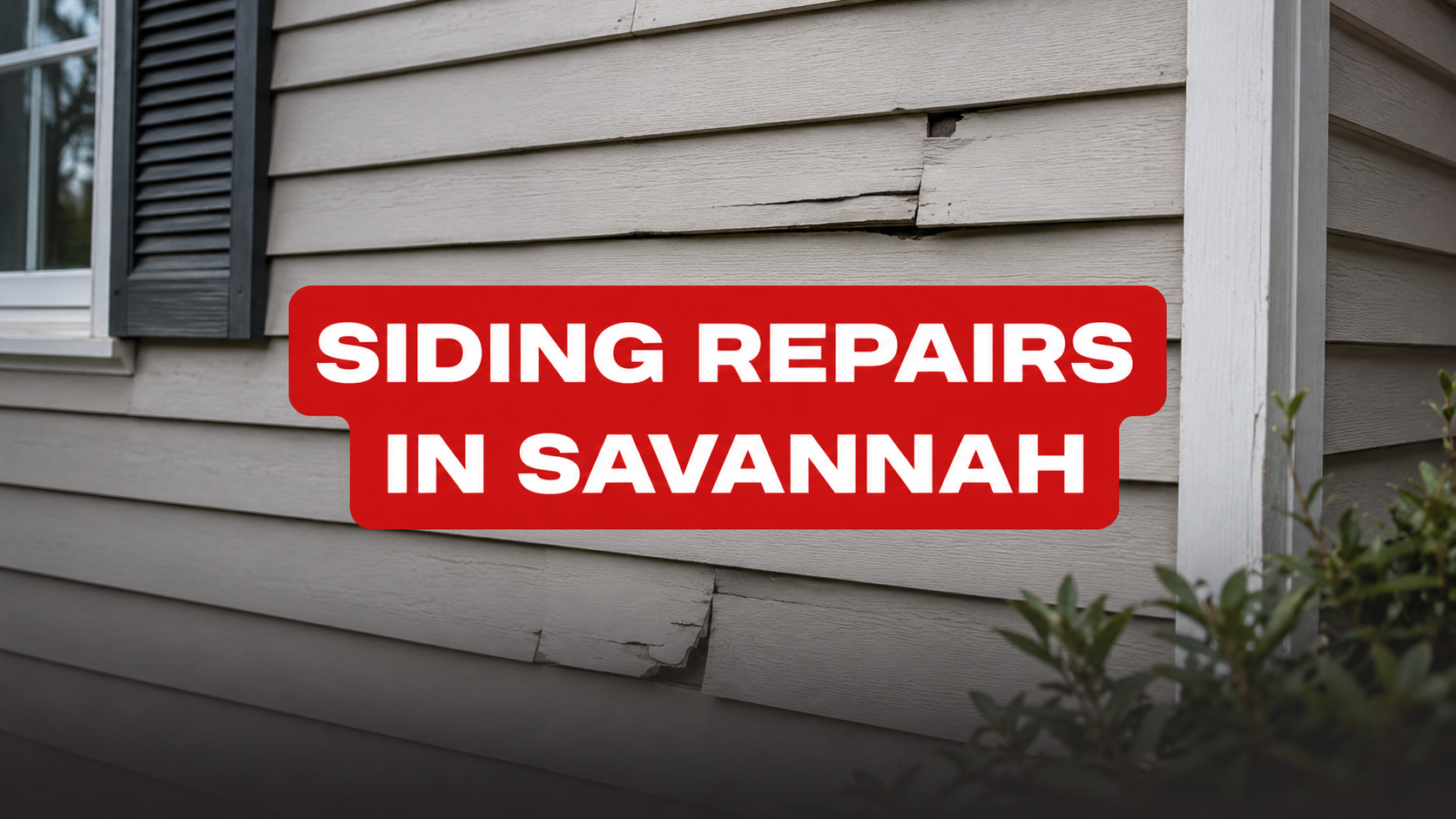
When the siding on your home is loose, cracked, missing, or damaged by a storm, it needs attention before Savannah’s heat, humidity, and heavy rain make the problem worse.
Roofing Experts of Savannah provides professional siding repair in Savannah, GA, for homeowners dealing with wind damage, falling branches, cracked panels, moisture intrusion, wood rot, and other exterior problems.
We serve Savannah, Pooler, Richmond Hill, Garden City, Port Wentworth, Rincon, The Islands, Skidaway Island, and nearby communities throughout Chatham, Bryan, and Effingham Counties.
I started Roofing Experts of Savannah in 2008 after spending years in the construction industry. Since then, our team has completed more than 1,000 roofing projects and helped local homeowners protect their properties from the weather we know all too well.
Our approach is simple: be open, honest, and transparent. We inspect the damage, explain what we find, and recommend the repair that makes the most sense for your home.
“Siding damage is not always as simple as replacing one panel. The most important part of the job is finding out whether water got behind it and caused damage you cannot see.”
— Derek Adams, Owner of Roofing Experts of Savannah
Contact Roofing Experts of Savannah to schedule a siding damage inspection.
Savannah homeowners know how quickly our weather can change.
A summer thunderstorm can bring strong wind and heavy rain. Tropical storms and hurricanes can send branches, fencing, outdoor furniture, and other debris into the side of a house. Even a storm that does not pass directly over Savannah can produce wind strong enough to loosen siding panels or open gaps around windows and doors.
Storm-damaged siding is more than an appearance problem. Once a panel is cracked, bent, or missing, wind-driven rain can reach the house wrap, wall sheathing, insulation, and wood framing underneath.
That hidden moisture can lead to:
Wood rot
Mold or mildew
Wet insulation
Interior water stains
Peeling paint
Pest problems
Higher repair costs
Our storm damage siding repair service starts with a careful inspection of the affected wall and the exterior components around it. We look at the siding, trim, flashing, soffit, fascia, gutters, windows, and nearby roofline to determine where water may be getting into the home.
Strong winds in Savannah, on Tybee, or even in Pooler can loosen siding panels, bend corner posts, separate seams, and pull entire sections away from the house. This is especially common when siding is older, brittle, or improperly installed. Panels installed too tightly may also crack or buckle as temperatures change.
After a storm, you will want to inspect your home for the following just to be safe!
A siding panel in your yard
A section rattling in the wind
Gaps between panels
Exposed house wrap
Bent corner trim
Loose siding around windows
New water stains inside the home
Missing or loose siding should be repaired promptly. An exposed exterior wall is no longer fully protected from Savannah’s rain, humidity, sunlight, and insects.
If the damage is limited to a few panels, a targeted repair may be enough. If several walls are loose, faded, brittle, or damaged, replacing a larger section may offer better protection.
We will explain both options and tell you what we would recommend if it were our own home.
Tree limbs and flying debris are common causes of siding damage during severe weather. A branch can crack vinyl siding, dent metal siding, split wood siding, or damage the wall underneath. Fencing, signs, lawn furniture, and other loose objects can also strike a home during high winds.
Even when the impact mark looks small, there may be hidden damage behind the panel. If a tree or large branch hits your home, stay away from the area until you know it is safe. Watch for electrical hazards, broken glass, fallen power lines, or visible structural movement.
Once the property is safe, our team can inspect the damaged siding and the surrounding roof, trim, gutters, soffit, and fascia.
Some of the worst siding problems are the ones homeowners cannot see from the ground. Wind-driven rain can enter through a small crack, loose seam, failed caulk joint, or damaged area around a window. Once water gets behind the siding, Savannah’s high humidity can make it difficult for the wall to dry.
Signs of hidden moisture may include:
Soft or spongy areas
Warped siding
Bubbling exterior paint
Peeling interior paint
Musty smells
Green or black growth
Water stains around windows
Damp carpet or drywall
Increased insect activity
Installing new siding over rotten wood will not solve the problem. The source of the water needs to be identified, and damaged material should be addressed before the wall is closed again.
“I would rather show a homeowner a small moisture problem today than come back months later after it has spread into the framing. Catching damage early usually gives you more repair options.”
— Derek Adams
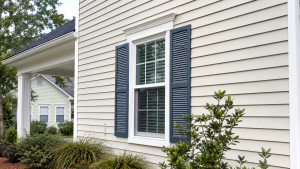
When siding is missing and the wall underneath is exposed, temporary protection may be needed until permanent repairs can be completed. The priority is to limit additional water intrusion and prevent more damage to the house wrap, sheathing, and insulation.
Contact us as soon as you notice an exposed section of wall. We will explain current scheduling and determine the most practical next step based on the condition of your home.
Siding takes a beating in Coastal Georgia; that is no secret! Our homes face intense sunlight, high humidity, salt air, heavy rain, strong wind, insects, and year-round temperature changes. Over time, those conditions can weaken exterior materials and create openings where moisture can enter.
Here are some of the most common siding problems we inspect around Savannah.
What are the most common siding issues after a big storm hits Coastal Georgia? Here is what we often see:
When possible, we can remove and replace the affected siding without disturbing the entire exterior. We also inspect the material underneath to make sure the visible crack is not hiding a larger moisture problem.
Loose siding may move, rattle, or lift away from the wall when the wind picks up.
A panel can become loose because of storm damage, age, improper fastening, or years of expansion and contraction. Missing siding is often noticed after a homeowner finds a panel in the yard.
Do not ignore a loose section simply because it has not fallen off yet. The movement may allow rain to get behind the siding, and the panel could come free during the next storm.
Savannah’s summer heat can be hard on exterior materials, from fading to cracking vinyl siding, or to reducing the lifespan way too fast!
Vinyl siding needs room to expand and contract. If it was installed too tightly, it may buckle or wave as temperatures rise. Warped siding may also be a sign of:
Moisture behind the wall
Improper installation
Heat reflected from nearby windows
Damaged sheathing
Age-related wear
If only one section is affected, a repair may be possible. Widespread warping may indicate that more of the siding needs to be replaced.
Moisture damage is one of the most important siding problems to catch early.
Water can enter around windows, doors, roof-to-wall connections, trim boards, failed caulking, damaged flashing, and loose siding panels.
Once the wood underneath stays wet, it may begin to soften or rot. The problem can spread beyond the area that is visible from outside.
Our goal is not to cover the damage. We want to identify the source of the moisture and recommend a repair that protects the home long-term.
Your siding does not work by itself.
Soffit, fascia, gutters, flashing, corner boards, and window trim all help control water and protect the exterior walls.
A leaking gutter can send water down the siding. Rotted fascia can allow moisture near the roofline. Open trim joints can let rain enter around windows and doors.
That is why we inspect the surrounding exterior instead of focusing only on the damaged siding panel.
Because Roofing Experts of Savannah also works with roofing, gutters, soffit, and fascia, we can look at the entire problem and explain which exterior component may be causing the damage.
Different siding materials react differently to Savannah’s climate. The correct repair depends on the type of siding, how it was installed, and what caused the damage.
Vinyl siding is common because it is affordable, low-maintenance, and available in many colors and styles.
However, it can crack after an impact, pull loose during strong winds, buckle in extreme heat, or become brittle with age.
Individual vinyl siding panels can often be replaced when the damage is limited. The biggest challenge may be matching the color and profile of older siding.
Years of sunlight can fade the original material, and some styles may no longer be manufactured. We will explain the available matching options before the work begins.
Fiber cement siding is known for its durability, but it is not damage-proof 100%, especially after strong Savannah storms. These cement fiber boards can crack, chip, loosen, or absorb moisture if they were installed incorrectly or if caulking and flashing fail. A proper repair may involve replacing the damaged board, checking nearby fasteners, correcting open joints, and inspecting the wall underneath for moisture.
Wood siding fits the look of many older Savannah homes, especially in historic neighborhoods. It also needs regular care in general because high humidity, rain, termites, and trapped moisture can cause boards to rot, swell, split, or peel. Wood siding repairs may involve replacing damaged boards, repairing the material underneath, correcting the source of the moisture, and preparing the new wood for paint or protective coating.
Matching the profile and appearance of older wood siding takes care and attention, especially on historic properties, and one solution we use here at Roofing Experts is to use a synthetic cement fiber option and match the paint to your existing wood siding.
In many cases, yes we will be able to replace one section of siding, simply removing a few damaged pieces and adding new ones.
If the damage is limited to one area and the siding around it is still in good condition, we may be able to replace only the affected panels or boards.
A localized repair often makes sense when:
Only a few panels are damaged
The remaining siding is secure
There is no widespread moisture damage
A close material match is available
The siding is not brittle or failing in other areas
There are situations where replacing a larger section may be the better long-term choice or all of your siding. This may be true when we see the following:
Damage affects several walls
Matching material is unavailable
The siding is badly faded
Panels are brittle and break during removal
There is widespread wood rot
The siding has repeated repair problems
Much of the exterior is near the end of its useful life
We will not push you toward a full replacement when a repair will solve the problem. We will also be honest when a small patch is unlikely to hold up or look right.
“Being transparent means giving homeowners the full picture. Sometimes one panel is all you need. Other times, repairing one spot would only delay a larger problem.”
— Derek Adams
The decision between repair and replacement depends on more than the size of the damaged area. Other factors include how old the siding is, what the long-term cost will be, and your budget for new siding. Here are the factors we always help you consider:
The age of the siding
The siding material
The amount of storm damage
Whether moisture reached the wall
The condition of nearby panels
Whether replacement material can be matched
The number of past repairs
The homeowner’s long-term plans
A repair is often the right choice when the problem is isolated, and the rest of the siding remains in good condition. Replacement may provide more value when the siding is failing across several areas, allowing repeated water intrusion, or becoming too brittle to repair without causing more damage.
Our job is to show you what is happening and help you make an informed decision.
You do not have to live in Savannah long to see what our weather can do to a house.
High humidity slows the drying process when water gets behind siding. That can increase the risk of mold, mildew, wood rot, and damaged insulation.
Coastal storms can push rain through small openings that might not leak during normal weather. Loose seams and failed flashing are especially vulnerable.
Strong sunlight can fade siding, dry out sealants, and make older vinyl more brittle. Heat can also cause siding to expand and buckle if it was installed too tightly.
Homes closer to the coast may experience faster corrosion of metal fasteners, flashing, trim, and other exterior components.
Properties on Tybee Island, Wilmington Island, Whitemarsh Island, Skidaway Island, and other exposed areas may need more frequent exterior inspections.
High winds can pull siding away from a home, while falling trees and flying debris can cause impact damage.
Regular inspections help homeowners find loose panels, failed caulking, open seams, and moisture problems before the next major storm arrives.
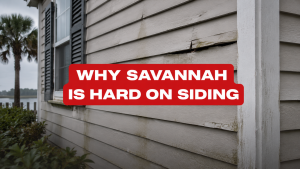
After a storm, you should always walk around your home and look for missing panels, loose trim, fallen branches, cracks, dents, and exposed wall material. Do not approach fallen power lines or areas with structural damage.
Photograph the damaged siding, fallen debris, surrounding property, and any interior water stains.
Clear documentation can be helpful if you decide to contact your insurance company.
If water is entering the home, move furniture and belongings away from the affected wall when it is safe to do so.
Do not climb a ladder or attempt an exterior repair during unsafe weather.
An exterior inspection can determine whether the damage is limited to the siding or extends into the house wrap, sheathing, insulation, trim, roofline, or framing.
Homeowner’s insurance may cover siding damage caused by wind, falling trees, hail, or flying debris, depending on the policy and circumstances.
We can document visible damage and provide an estimate for the recommended repairs. Your insurance company and adjuster will make the final decision regarding coverage.
Roofing Experts of Savannah also helps commercial property owners and managers with exterior siding damage.
Commercial siding may be damaged by storms, delivery vehicles, landscaping equipment, moisture, fallen branches, or normal wear.
Loose panels and damaged exterior materials can affect the appearance of a property while allowing water to enter the building.
We can inspect exterior damage on:
Offices
Retail buildings
Warehouses
Multifamily properties
Community buildings
Other commercial facilities
Depending on the building, repairs may involve siding panels, metal wall systems, flashing, trim, soffit, fascia, sealants, or related exterior components.
We understand that commercial repairs need to be planned carefully to limit disruption to employees, tenants, and customers.
I am a Savannah native, and this community has always been home.
I played football at Calvary before going on to play at Georgia Southern. I later built a career in construction and founded Roofing Experts of Savannah in 2008.
Since then, our team has completed more than 1,000 roofing projects throughout the Savannah area. I now bring more than 20 years of construction and exterior experience to the homes and businesses we inspect.
I am also a husband and a father of two. I understand that your house is not just a structure. It is where your family lives, rests, and makes memories.
That is why we built this company around three values:
We explain what we see and give homeowners the opportunity to ask questions.
We recommend the work we believe the property actually needs.
We discuss the scope of the repair and the available options before work begins.
We are not a company that appears only after a storm and disappears when the work is finished. We live here, work here, and care about the reputation we have built with our neighbors.
Roofing Experts of Savannah provides siding repair and storm damage inspections throughout the Savannah region, including:
Savannah
Pooler
Richmond Hill
Garden City
Port Wentworth
Rincon
Wilmington Island
Whitemarsh Island
Skidaway Island
The Landings
Isle of Hope
Tybee Island
Chatham County
Bryan County
Effingham County
Do not let cracked, loose, missing, or storm-damaged siding leave your home exposed.
Contact Roofing Experts of Savannah to schedule a siding damage inspection and get an honest explanation of your repair options.
The cost of siding repair depends on the siding material, the number of damaged panels, accessibility, labor, and whether there is moisture or rotten wood behind the siding.
Replacing one damaged vinyl panel will usually cost less than repairing a large section with damaged sheathing or framing.
Because siding problems can look smaller from the outside than they really are, an inspection is the best way to receive an accurate estimate.
Yes, individual siding panels or boards can often be replaced when the damage is limited and the surrounding material is still in good condition.
The main challenge is matching older siding. The original color may have faded, or the siding profile may no longer be manufactured.
We will explain the best available matching options before completing the repair.
Storm-damaged siding should be inspected as soon as practical, especially if a panel is missing or the wall underneath is exposed.
Open areas can allow rain, humidity, insects, and sunlight to damage the house wrap, sheathing, insulation, and framing.
Even when the siding is still attached, loose seams can allow wind-driven rain to enter behind it.
Homeowner’s insurance may cover siding damage caused by a covered event such as wind, hail, falling trees, or flying debris.
Coverage depends on your policy, the cause of the damage, the condition of the siding, and the insurance company’s findings.
We can inspect and document visible damage and provide an estimate for the recommended repairs. Your insurance carrier will determine whether the loss is covered.
Sometimes.
The ability to match siding depends on the manufacturer, material, profile, texture, age, and amount of fading.
A new panel may be the correct original color but still look slightly different because the existing siding has been exposed to years of Savannah sunlight.
We will review the available options and explain what kind of match you can reasonably expect.
Possible warning signs include warped panels, bubbling paint, soft wood, mildew, musty odors, water stains, peeling interior paint, damp drywall, and staining around windows or doors.
Hidden moisture may not create an obvious sign right away. If your siding was damaged during a storm or has an open seam, schedule an inspection before the problem spreads.
A small warped or buckled section may be repairable. The cause needs to be identified first.
Siding may buckle because it was installed too tightly, exposed to excessive heat, or affected by moisture and damaged sheathing underneath.
If warping is widespread, replacing a larger section may provide a better result.
Repair may be enough when the damage is isolated and the remaining siding is secure and in good condition.
Replacement may make more sense when the siding has widespread cracks, repeated moisture problems, severe fading, brittleness, warping, or damage across several walls.
We will inspect the exterior and give you an honest recommendation based on the condition of the home.
Humidity alone does not always damage siding, but it makes moisture problems worse when water gets behind the exterior.
Wet wall materials dry more slowly in Savannah’s humid climate. That can contribute to mildew, wood rot, damaged insulation, peeling paint, and pest activity.
Proper flashing, house wrap, drainage, sealing, and routine inspections help protect the home.
Yes, we can inspect siding damage along with related concerns involving the soffit, fascia, gutters, flashing, exterior trim, and nearby roofline.
These components work together to move water away from the home. Damage to one part of the exterior can cause problems in another, so inspecting the complete area is important.
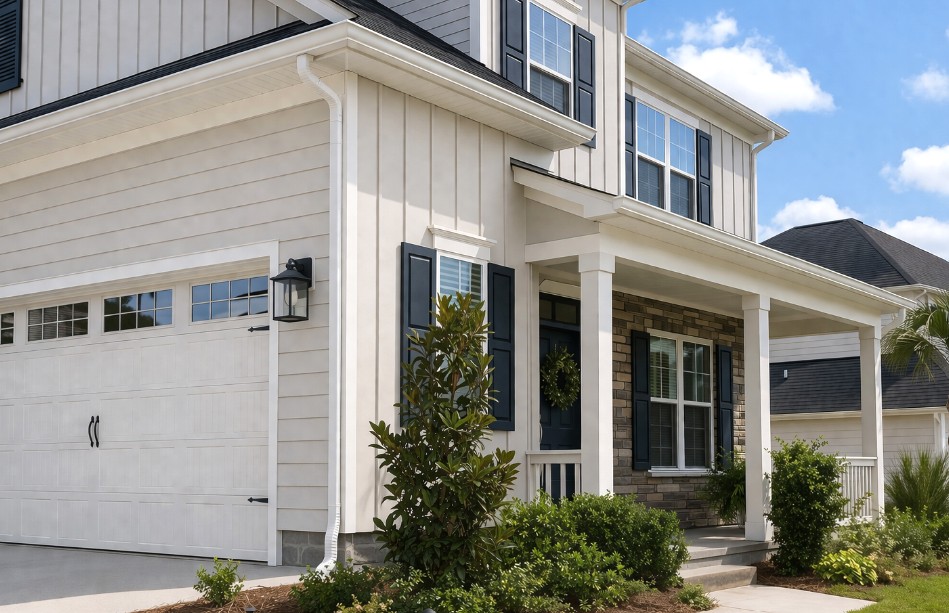

We install new roofs for homeowners like yourself! Get an asphalt shingle roof installed today!

Standing seam metal roofs look amazing and last forever. We can help install a metal roof!