
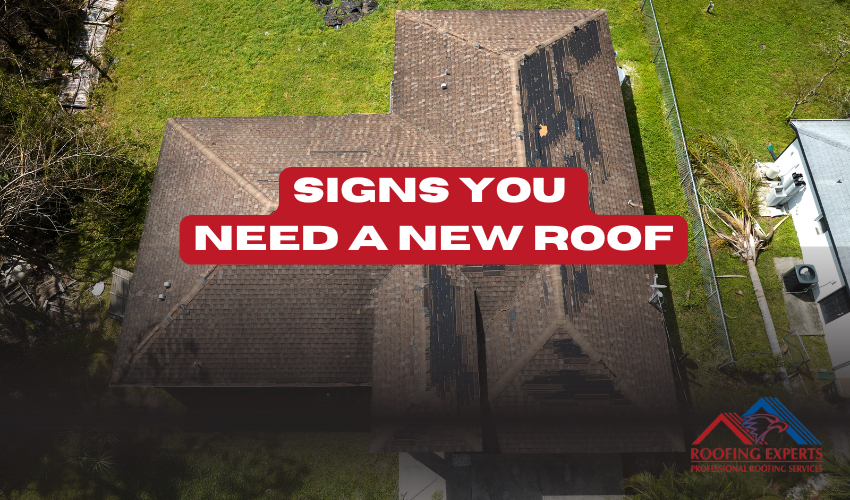
When is it time for a new roof in Savannah? While that is a bit of a loaded question, here at Savannah’s Roofing Experts, we aim to answer just that!
If your roof is over a decade old, you’ve probably started to wonder how much life it has left. In Savannah’s climate, that’s a smart question. Roof lifespan here depends on more than age alone. This guide explains the key signs it may be time for a new roof, what factors affect cost, and how professional inspections provide clear answers.
Quick List: You Need a New Roof Signs:
Here are our top 6 signs it is time you need to get a new roof
- Curling, cracked, or missing shingles
- Granules in gutter downspouts
- Recurring leaks after storms, roof leaks in general
- Sagging or uneven rooflines
- Rising energy bills
- Roof is 15+ years old in Savannah’s climate (shingles lifespan)
What Are the Most Common Signs You Need a New Roof?
Think of it like a hit TV series that starts strong but slowly goes off the rails. One bad episode is fixable. Five in a row means it’s time to end the season. Roofs work the same way, especially in Savannah’s heat, humidity, and storm cycles. When multiple warning signs show up together, replacement is usually the smarter move.
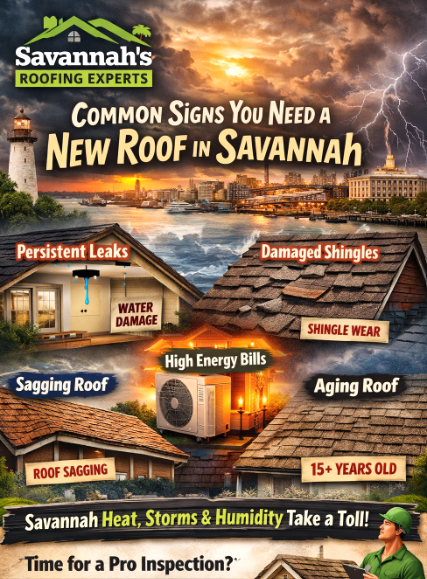
Here are the top five signs Savannah homeowners shouldn’t ignore and why they matter:
- Persistent leaks after storms. One leak can be repaired. Repeated leaks mean the roofing system is failing at multiple points. Coastal rain finds weaknesses fast.
- Widespread shingle damage Curling, cracking, or granule loss across large areas signals age and UV breakdown, not isolated wear.
- Sagging or uneven rooflines. This often points to moisture damage beneath the surface. By the time sagging appears, structural layers may already be compromised.
- Rising energy bills. A failing roof allows heat and moisture intrusion, forcing HVAC systems to work harder during Savannah summers.
- Roofage near or past its lifespan. In coastal Georgia, many roofs age faster than the national average. Once materials near the end of their expected life, repairs become temporary fixes.
How Do Leaks and Water Damage Indicate Roof Replacement?
Leaks are rarely the real problem. They’re the symptom. In Savannah homes, repeated moisture exposure leads to rotted decking, mold growth, and damage to insulation beneath the roof surface. When water damage appears in ceilings, walls, or attic spaces, it often indicates that the protective system has failed beyond a single repair point. At that stage, replacing the roof prevents further damage rather than chasing leaks one by one.
What Does Missing or Damaged Shingles Reveal About Roof Health?
Missing shingles are like missing teeth. One looks bad. Several mean the structure is struggling. In Savannah’s coastal winds and heavy rain, damaged shingles usually indicate weakened fasteners, aged materials, or underlayment failure. When shingle loss becomes common, the roof no longer protects the home as it should, even if leaks haven’t started yet.
How Much Does Roof Replacement Cost and What Factors Affect It?
Let’s reset the conversation to reflect how Savannah homeowners actually experience it. Roof replacement costs don’t start with materials. They start with exposure. Heat, humidity, rain cycles, and storm season all shorten roof life here, so replacements often require more prep work than people expect.
In Savannah, pricing shifts based on how much stress the roof has already absorbed. A roof that looks “fine” from the street may hide moisture issues, softened decking, or ventilation problems underneath. Those conditions add time, labor, and materials to the job. That’s why two neighbors can compare notes and realize their quotes aren’t even close.
The real takeaway is this: roof replacement cost isn’t just about installing something new. It’s about correcting everything the old roof couldn’t handle anymore in a coastal environment.
Which Factors Influence the Total Roof Replacement Cost?
How much does a new roof cost? The answer is in the details, with the greatest detail being size!
Roofing is priced per square foot, and every 100 square feet is commonly referred to as “One Square.” If your roof is 2,000 square feet, that would be 20 squares, and most architectural asphalt shingles start at $350 per square installed. In this case, the roof would cost $7,000. However, you have to add flashing, ridge vents, and other items priced per linear foot.
Some of the biggest cost drivers for a roof include:
- Size of roof
- Type of shingles or roofing material
- Condition of the roof decking underneath
How Does Roofing Material Impact Replacement Expenses?
Roofing material doesn’t just change the look of your home. It changes installation time, labor skill, lifespan, and long-term value. Here’s a clear Savannah-focused comparison.
| Roofing Material | Upfront Cost Impact | Installation Complexity | Typical Lifespan in Savannah | Long-Term Cost Outlook |
|---|---|---|---|---|
| Asphalt shingles | Lower | Standard | 15–25 years | Lower now, higher over time |
| Architectural shingles | Moderate | Standard | 20–30 years | Balanced cost and durability |
| Metal roofing | Higher | Skilled labor required | 30–50 years | Higher upfront, fewer replacements |
| Tile roofing | High | Highly specialized | 50+ years | Expensive upfront, very durable |
Cheaper materials reduce initial cost but may age faster in the sun and in moisture. Premium materials cost more upfront but often deliver better long-term value by lasting through multiple storm cycles.
What Is the Typical Lifespan of Different Roofing Materials?
If roofs aged in a vacuum, lifespan charts would be simple. Savannah makes it more complicated. Heat, humidity, salt air, heavy rain, and storm seasons all shorten the life of roofing materials compared to national averages. That’s why material lifespan here is less about the manufacturer’s label and more about how well the roof handles moisture and sun year after year.
In general, roofing materials fall into three lifespan tiers:
- Short- to mid-term materials that need closer monitoring
- Long-term materials that age slowly but cost more upfront
- Natural materials that require regular upkeep to reach their full lifespan
How Long Do Asphalt Shingles Usually Last?
Asphalt shingles are the most common roofing material in Savannah, and for good reason. They’re affordable, versatile, and work well when installed properly. That said, Savannah’s climate can shorten their lifespan compared to cooler, drier regions.
Most asphalt shingle roofs last:
- 15 to 20 years for standard three-tab shingles
- 20 to 30 years for architectural or dimensional shingles
Sun exposure, poor attic ventilation, and repeated storm stress are the biggest killers of lifespan. Shingles may appear intact from a distance, but lose granules and flexibility up close.
What Are the Lifespan Expectations for Metal, Tile, and Wood Shake Roofs?
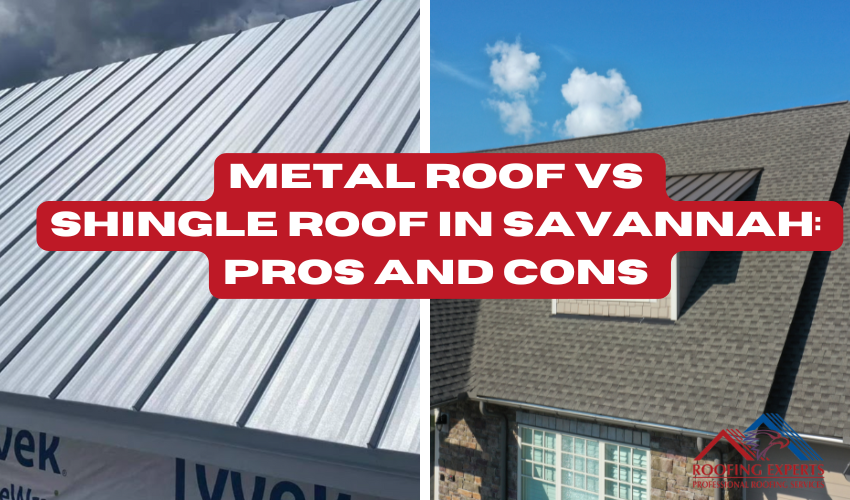
Metal and tile roofs are often chosen in Savannah for longevity. Metal roofing typically lasts 30 to 50 years, resists moisture better than asphalt, and reflects heat more effectively. Proper installation is critical, especially around fasteners and seams, but when done right, metal roofs age slowly.
Tile roofs, including clay and concrete, often reach 50 years or more. They handle heat extremely well and resist rot, but their weight requires proper structural support and careful installation.
Wood shake roofs fall into a different category. While visually appealing, they typically last 20 to 30 years in Savannah and demand regular maintenance. Moisture control is critical, and without consistent upkeep, the lifespan drops quickly.
How Can You Inspect Your Roof to Determine if It Needs Replacement?
Roof inspection is like a routine health check. You’re not looking for drama. You’re looking for patterns. In Savannah, roofs don’t usually fail overnight. They wear down quietly under heat, humidity, and repeated storms. A good inspection helps you spot whether your roof is aging normally or slipping toward replacement territory.
The goal isn’t to diagnose everything yourself. It’s important to notice enough warning signs to know whether the roof still has useful life left or if it’s time to bring in an expert before damage spreads.
What Are the Steps for a DIY Roof Inspection?
A DIY roof inspection can help homeowners notice obvious changes, but it should be treated as a preliminary check, not a final assessment. In Savannah, many serious roof issues develop beneath the surface where homeowners can’t see them.
If you choose to do a basic check, here’s how it typically goes:
1. Start indoors.
Look at ceilings, attic spaces, and upper walls for discoloration, soft spots, or damp smells. These often signal moisture movement before leaks become visible.
2. Walk the exterior perimeter
From the ground, scan for missing shingles, uneven rooflines, sagging areas, or flashing that looks loose or corroded. Use binoculars instead of climbing whenever possible.
3. Check guttersand downspouts
Excessive shingle granules, shingle fragments, or debris after storms can indicate accelerated wear.
4. Inspect after severe weather
Savannah storms can quickly shift shingles and flashing. New damage often shows up right after heavy rain or wind events.
That said, a DIY inspection has clear limits. You can’t safely assess underlayment, decking, ventilation performance, or hidden moisture. Walking on the roof can also cause damage or create safety risks.
DIY checks are useful for awareness, not decisions. When it comes to determining whether a roof truly needs repair or replacement, a professional inspection provides the accuracy and protection a homeowner can’t get alone.
When Should You Call a Professional for a Roof Inspection?
The moment your inspection raises more questions than answers, it’s time to call a professional roofer like the Roofing Experts here! That’s especially true if your roof is over 10 years old or has been repeatedly exposed to storms.
Professional inspections go beyond surface checks. They identify hidden moisture, underlayment failure, and structural concerns that aren’t visible from the ground. In Savannah, where humidity can mask damage until it’s severe, that deeper look matters.
You should also schedule a professional inspection:
- Before buying or selling a home
- After severe storms or hurricane activity
- When repairs become frequent but short-lived
- If energy bills rise without another explanation
What Are the Most Common Roofing Problems That Signal Replacement?
The most common red flags include:
- Recurring leaks in different areas, not tied to one flashing point
- Soft or spongy roof decking, often discovered during inspections
- Widespread shingle deterioration, not limited to one slope
- Chronic moisture in the attic, even without visible ceiling stains
- Repairs that stop working, forcing repeat fixes every year
How Do Ice Dams and Weather Damage Affect Roof Integrity?
Ice dams may sound like a cold-climate issue, but Savannah homes still experience weather-driven water backup, especially during rare freezes or heavy winter rain followed by temperature swings. When water can’t drain properly, it pushes under shingles and saturates the underlayment.
More commonly, Savannah roofs suffer from:
- Prolonged moisture exposure, which weakens decking over time
- Thermal expansion and contraction, stressing fasteners and seams
- Storm saturation, where repeated rain events prevent proper drying
What Are the Signs of Wind, Hail, and Flashing Damage?
Wind damage often shows up as lifted or missing roof shingle sections, especially along edges and ridgelines. Hail can bruise shingles, knocking off granules and shortening the roof’s life without causing obvious leaks. Flashing damage appears as bent, rusted, or separated metal around chimneys and vents.
Left unaddressed, these issues allow moisture in, leading to rot or mold. Regular maintenance and timely checks by a qualified roofing contractor help document damage for home insurance claims and prevent small problems from turning into major repairs.
The Final Word on Roof Signs
The weather here in Savannah, The Islands, Richmond Hill, and Pooler tests roofs year after year. Understanding the signs, costs, and lifespan helps homeowners plan wisely. Start with a professional roof inspection with Roofing Experts and get clear answers before the next storm decides for you.
- Savannah Roofing Experts specialize in roofing, including metal, asphalt shingles, and commercial roofing.
- We can help with roof repairs and roof leak fixes.
- Recgonized as one of the best roofing companies in Savannah.
Comments are closed